
Secrets of the Dead
"Unearthing History"
Part detective story, part true-life drama, long-running series explores some of the most iconic moments in history to debunk myths and shed new light on past events. Using the latest investigative techniques, forensic science and historical examination, it shatters accepted wisdom, challenges prevailing ideas, overturns existing hypotheses, spotlights forgotten mysteries, and ultimately rewrites history.
First Aired
2000-05-15
Status
Returning Series
Network
PBS
Seasons
Season 1
5 eps
Season 2
6 eps
Season 3
6 eps
Season 4
6 eps
Season 5
5 eps
Season 6
5 eps
Season 7
2 eps
Season 8
4 eps
Season 9
6 eps
Season 10
3 eps
Season 11
3 eps
Season 12
6 eps
Season 13
7 eps
Season 14
3 eps
Season 15
5 eps
Season 16
5 eps
Season 17
7 eps
Season 18
6 eps
Season 19
6 eps
Season 20
7 eps
Season 21
6 eps
Season 22
10 eps
Season 23
4 eps
Season 24
2 eps
Season 1 Episodes
Watch All →
E1. Catastrophe (1)
Did a cataclysmic event plunge humankind into the period known as the early Dark Ages? Scientists now believe the early Dark Ages may have been triggered by a natural event that occurred around 535 A.D. Science writer David Keys is convinced that the cause was a phenomenon of cataclysmic proportions. At the center of a complex chain of events seems to be "a loud bang" -- a volcanic explosion equal to "two thousand million Hiroshima size bombs." The subsequent environmental calamity, Keys believes, affected human civilization from Mongolia to Constantinople, precipitating plague, famine, death, great migration, the fall of the great Mexican city of Teotihuacan, the Anglo-Saxon victory over the Celts and perhaps even the rise of Islam. (UK / PBS) Released to video (VHS) as a single episode. Run time 1:50.
E2. Catastrophe (2)
Did a cataclysmic event plunge humankind into the period known as the early Dark Ages? Scientists now believe the early Dark Ages may have been triggered by a natural event that occurred around 535 A.D. Science writer David Keys is convinced that the cause was a phenomenon of cataclysmic proportions. At the center of a complex chain of events seems to be "a loud bang" -- a volcanic explosion equal to "two thousand million Hiroshima size bombs." The subsequent environmental calamity, Keys believes, affected human civilization from Mongolia to Constantinople, precipitating plague, famine, death, great migration, the fall of the great Mexican city of Teotihuacan, the Anglo-Saxon victory over the Celts and perhaps even the rise of Islam. (UK / PBS) Released to video (VHS) as a single episode. Run time 1:50.
E3. The Lost Vikings
Why did Greenland's Vikings disappear? The Vikings of Greenland left no clues to their sudden and mysterious disappearance. Or did they? On a desolate coast of Greenland, an international team of archaeologists, forensic anthropologists, entomologists and botanists sets out to investigate clues in a complex chain of events that may have led to the demise of a Viking colony. Unearthing the ruins of a settlement that included a cathedral complete with stained glass, the scientists carefully identify and date the vestiges of the Viking society. Among their discoveries are a "mini Ice Age," a war with neighboring Inuits, and a religious order that may have doomed the Vikings to obsolescence. (UK/PBS 55 min)
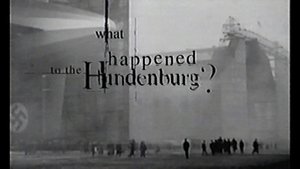
E4. What Happened to the Hindenburg?
Why did the great airship Hindenburg explode? The disintegration of the Hindenburg in 1937 is one of the most famous disasters of the 20th century. It took more than 100 years to develop what was, in its day, the fastest, most technologically advanced and most luxurious form of transportation in the world -- and 34 seconds to destroy it. The accident that ended the golden age of airships is generally attributed to the ignition of hydrogen gas used for lift. Addison Bain, a retired NASA scientist and hydrogen specialist, sets out on a personal quest of theorizing and experimentation to prove the Hindenburg's real flaw was only skin deep. (UK/PBS 55 min)
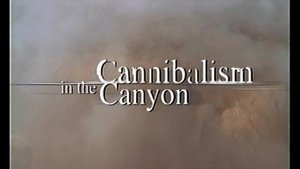
E5. Cannibalism in the Canyon
What happened to the peaceful ancient Pueblo civilization of the American southwest? For 1000 years, the Anasazi -- a democratic people with rich achievements in architecture, agriculture, astronomy and art -- flourished in what is now New Mexico. Yet around 1200 A.D., something brought their utopia to a sudden and mysterious end. Paleo-anthroplogist Christy Turner has found what he believes are clear signs of cannibalism among the Anasazi ruins, but American Indian groups and other archaeologists are skeptical. And while the evidence is difficult to refute, the meaning of the findings is still open to debate. In the shadow of a debate both scientific and political, question remain: Did the Anasazi culture become cannibalistic, or did cannibals from afar stumble across the perfect victims? (UK/PBS 55 min)
More Like This
Lost Treasures of Egypt

Antiques Roadshow

How Do They Do It?
Ancient Aliens
Drain the Oceans

The UnXplained

The Story of God with Morgan Freeman
Prehistoric Planet

Biography

The Reluctant Traveller with Eugene Levy

30 for 30
Files of the Unexplained

The Story of Film: An Odyssey

Horizon
Cold Case Files

Doctor Who Confidential
Earth at Night in Colour

E! True Hollywood Story

The World According to Jeff Goldblum
America's Book of Secrets