
Ideas of the 20th Century
In Ideas of the 20th Century, Dr. Daniel Bonevac examines the major intellectual movements that shaped modern Western thought. Beginning with the Scientific, Agricultural, and Industrial Revolutions, the course explores how traditional beliefs came under pressure, creating tensions between human freedom and scientific determinism and contributing to cultural and political upheavals. Through the ideas of thinkers such as Nietzsche, Marx, Freud, and the existentialists, as well as debates over totalitarianism, liberty, language, truth, and justice, the course traces the search for meaning in the modern world. By connecting philosophy, politics, and culture, it reveals how the central ideas of the 20th century continue to shape contemporary society and the challenges facing Western civilization today.
First Aired
2026-03-19
Status
Returning Series
Seasons
Season 1 Episodes
Watch All →E1. A Mighty Maze
In our introductory lecture, Dr. Bonevac reveals the interdisciplinary roots of 20th-century thought, tracing how the Scientific, Agricultural, and Industrial Revolutions reshaped society and human life. He shows that as progress brought prosperity, it also sparked a lasting philosophical tension between the “manifest image” of free, rational agency and the “scientific image” of a physically-governed world. We see how this unresolved clash—between reason, morality, and determinism—remains a defining challenge of modernity.
E2. The Abdication of Belief
In lecture two, we encounter the crisis of belief in the 20th century, examining how tensions between scientific and manifest worldviews led to abandoning traditional values. We discuss Hume's is-ought problem and responses from Wittgenstein's transcendental ethics, Nietzsche's relativism and "death of God," to Dostoevsky's Grand Inquisitor. The lecture concludes by examining constrained versus unconstrained visions, highlighting the dangers of abandoning absolute values and the slide toward narcissism without external moral anchors.
E3. Wisdom of the Age
In lecture three, we analyze how early 20th-century intellectual movements like Shaw's cynicism about moral values and Italian Futurism's violent rejection of the past helped create conditions for World War I. We explore Shaw's dismissal of traditional ethics and embrace of Stalin's violence, alongside the Futurists' glorification of war and destruction as progress. The discussion concludes with WWI's catastrophic toll and its shattering of civilization's faith in progress, creating a generation that lost innocence and trust in institutions.
E4. Disturb the Universe
In lecture four, we examine the rise of conservatism and progressivism in the 1910s and 1920s and their lasting impact on American politics. Focusing on Woodrow Wilson’s top-down, state-centered vision of freedom, we contrast it with the laissez-faire policies of Harding and Coolidge that fueled the economic boom and cultural dynamism of the Roaring Twenties. Dr. Bonevac concludes by highlighting both the era’s remarkable achievements and a growing intellectual elite increasingly at odds with the society it was meant to serve.
E5. Downward to Darkness
In lecture five, we study the Russian Revolution's roots in Marxist philosophy, examining how Marx's materialism reduced ethics to tactics serving class interests and identified human essence with production. We trace Lenin's radical departure from Marx's economic determinism, implementing totalitarian rule through systematic terror that killed hundreds of thousands. The discussion highlights fundamental problems with communist theory including problems of motivation, the emergence of new ruling elites, and economic collapse that forced Lenin to partially restore private property before his death.
E6. The Ruins of Meaning
In lecture six, we explore the profound impact of World War I on Western intellectual thought through the poetry of W. B. Yeats and T. S. Eliot, examining how both poets grappled with the collapse of traditional values and the search for meaning in a fractured civilization. We analyze Yeats's cyclical view of history in "The Second Coming" and his quest for spiritual permanence in "Sailing to Byzantium," alongside Eliot's fragmented vision in "The Waste Land," which depicts a spiritually barren modern world. The lecture concludes by highlighting how both poets, despite their different approaches, ultimately argue that life requires connection to something eternal or larger than oneself to have meaning.
Cast
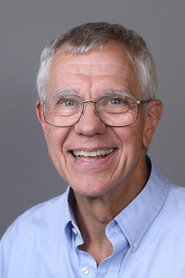
Dr. Daniel Bonevac
Host
More Like This
The World at War
World War II in Colour
WWII in HD
Hitler's Circle of Evil
How to Become a Tyrant

Greatest Events of World War II in Colour
The War
Grant
Oliver Stone's Untold History of the United States
Churchill at War
Buzzfeed Unsolved: Supernatural
The Roosevelts: An Intimate History
The Civil War
The American Revolution

WWE 24
The Vietnam War
Auschwitz: The Nazis and the Final Solution
World War II: From the Frontlines
Amend: The Fight for America
The World Wars