
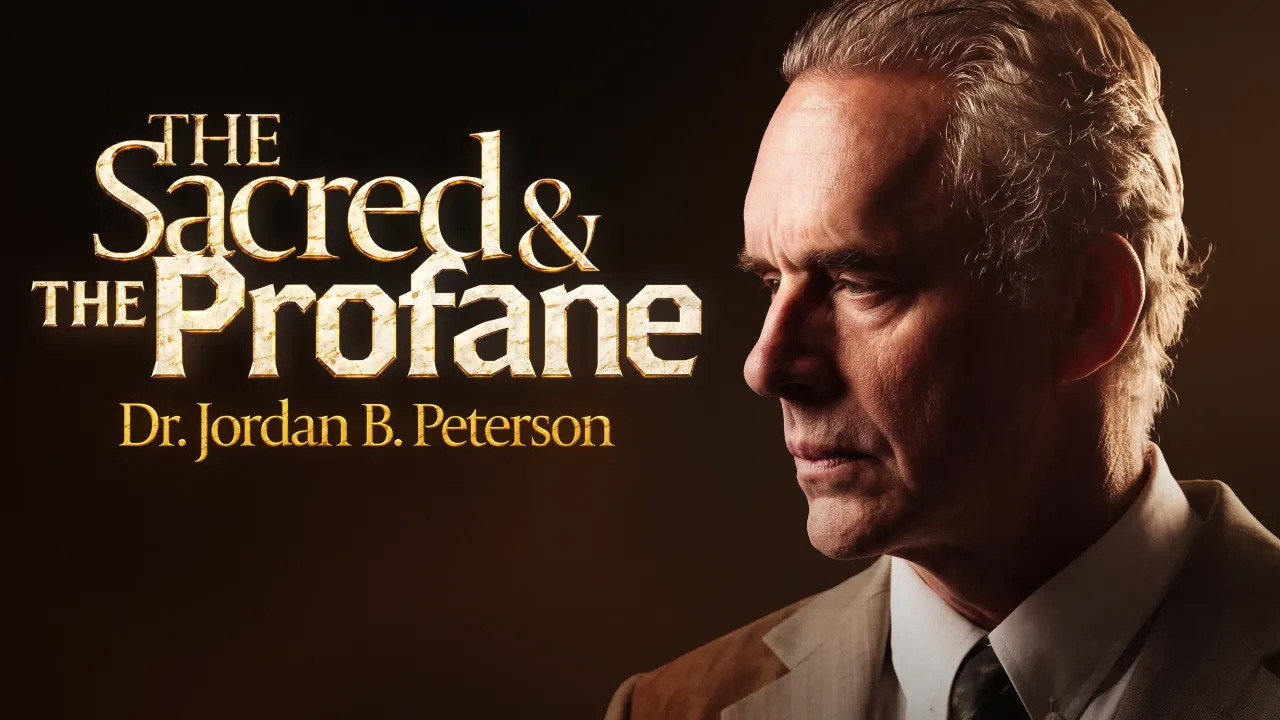
The Sacred & The Profane
In The Sacred and the Profane, an eight-hour course, Dr. Jordan B. Peterson explores Mircea Eliade’s ideas and the powerful ways sacred experience shapes human consciousness, meaning, and civilization itself. Drawing on comparative mythology, psychology, and religious traditions, the lectures reveal recurring archetypal patterns—from confronting chaos and undergoing transformation to establishing meaningful order—across cultures and history. Key themes include archetypal narratives, sacred centers and wilderness, hierarchies of meaning, the nature of recurring existential crises, and the ultimate role of sacrifice and voluntary responsibility in creating cosmos from chaos.
First Aired
2026-09-17
Status
Returning Series
Seasons
Season 1 Episodes
Watch All →E1. Architecture of the Sacred
In our introductory lecture, Dr. Peterson begins our exploration of Mircea Eliade’s The Sacred and the Profane, arguing that human consciousness is shaped by narratives rooted in the sacred—experiences of awe, terror, and fascination. Situating Eliade within the Jungian search for universal patterns, the lecture contrasts this with postmodern skepticism toward grand narratives and argues that even secular people unconsciously engage in religious patterns of thought. Through examination of concepts such as sacred space, time, nature, and the hero’s journey, Dr. Peterson shows how religion emerges as a process of confronting chaos, undergoing transformation, and discovering meaning.
E2. Hierarchy of Meaning
In lecture two, Dr. Peterson investigates the relationship between sacred and profane space, hierarchies of meaning, and the phenomenology of religious experience through the work of Otto and Eliade. Drawing on examples from film, psychology, mythology, and everyday life, the discussion examines how we orient ourselves through nested hierarchies of goals—from ordinary tasks to ideals of who we want to become—and how transformation begins when we attend to what genuinely calls us or troubles our conscience. The lecture concludes by exploring how establishing order and the right attitude at any new beginning can be understood as a sacred act that profoundly shapes what follows.
E3. Sacred Center
In lecture three, Dr. Peterson presents the sacred center point—the foundational principle around which psychological integration, social order, and meaningful perception take shape. From ancient rituals and the planting of flags to the Mosaic tabernacle, Christian crucifix, and cathedral architecture, the lecture traces a recurring pattern: true order requires confronting suffering, death, and malevolence in service of the highest good. At the heart of this pattern is a sacred center from which meaning radiates outward, offering a powerful lens for understanding both human perception and the structure of civilization.
E4. Chaos to Cosmos
In lecture four, we consider Mircea Eliade's concept of sacred space and how traditional societies transform chaos into cosmos through ritual, orientation, and sacrifice. We examine symbols such as cosmic mountains, sacred poles, and celestial navigation as expressions of humanity's need for transcendent direction. Drawing on stories from Gilgamesh to Abraham, we discuss how depth of engagement and voluntary responsibility create meaningful order, arguing that reality emerges through courageous, sacrificial action aimed upward, transforming possibility into a cosmos that is good.
E5. The Cycle of Transformation
In lecture five, we study how human perceptions act as low-resolution representations of reality that inevitably collapse when confronted with unexpected complexity. Drawing on Eliade, comparative mythology, and stories such as Marduk and Tiamat, Jonah, and Genesis, Dr. Peterson examines the recurring process of sacrificing outdated conceptions, confronting chaos, and rebuilding a higher-order understanding. This archetypal pattern appears across cultures—in founding cities, building homes, and beginning anew—and reveals transformation itself as the deepest form of creative order.
E6. Time Eternal
In lecture six, we learn about Mircea Eliade's distinction between sacred and profane time, examining how sacred time captures eternal, recurring patterns beneath surface events. Through examples like Exodus and the burning bush, we consider how religious narratives convey "meta-real" truths more foundational than apparent reality. The discussion covers consciousness as mediator between chaos and order, the roles of Adam and Eve in Genesis and their parallels with the feminine and masculine, and how moral order must be discovered rather than imposed. Finally, through interpretations of fairy tales and dreams, we conclude with Eliade’s insight that nature reveals the sacred.
Cast
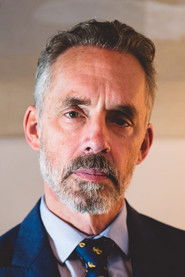
Jordan B. Peterson
Host
More Like This
Buzzfeed Unsolved: Supernatural

WWE 24

Beyond Stranger Things

History 101

How Do They Do It?
Eli Roth's History of Horror
Secrets of the Dead

Top Gear

Hulk Hogan: Real American

World War II with Tom Hanks

The World According to Jeff Goldblum

Visible: Out on Television
Mysteries at the Museum

Wise Guy: David Chase and The Sopranos
Mind Field

McCartney 3, 2, 1
The Story of God with Morgan Freeman
The Real History of Science Fiction

Watch the Sound with Mark Ronson

JANET JACKSON.